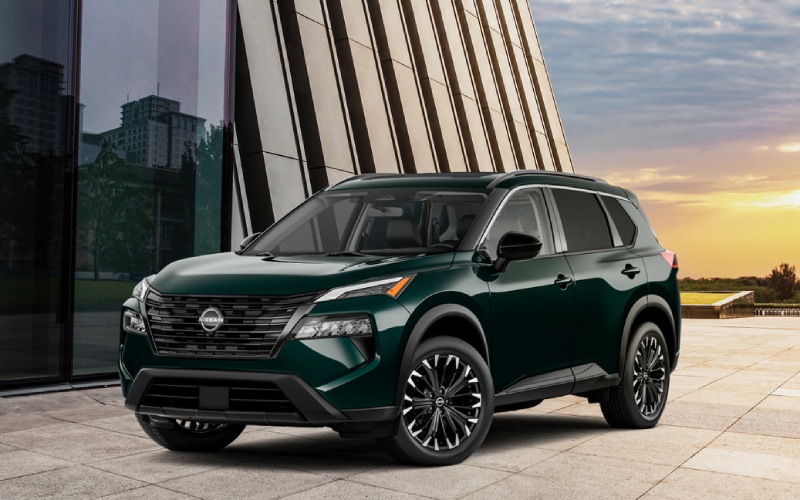
Cardinale Nissan - 2026 Nissan Rogue or 2026 Toyota RAV4 – Which SUV has the more helpful parking and visibility tech for Monterey, CA drivers?
When shoppers compare two of the segment’s most popular compact SUVs, a common question comes up fast: which one actually helps you park and maneuver more confidently in crowded lots and tight streets? That focus on everyday visibility is especially relevant for Monterey, CA drivers who parallel park near the wharf, swing into angled curbs along Alvarado Street, and navigate trailhead lots on the weekend. So how do the latest Nissan and Toyota systems stack up when you look beyond the screen sizes and into what the cameras and software can do for you at low speeds?
Nissan equips the Rogue with an available 3D Enhanced Intelligent Around View Monitor with an Invisible Hood View. That last part is more than a neat trick. Invisible Hood View stitches camera feeds into a forward perspective that seems to place the hood out of sight, revealing curbs, wheel stops, and low obstacles so you can place your tires with confidence. You can also rotate the 3D view around the vehicle for a clear sense of where you sit in the space, helping you line up perfectly the first time. Toyota answers with available driver-assist features that support automated parking in some scenarios and provide multiple camera perspectives; it’s a solid toolkit for straight-in or parallel moves. The difference is how deftly Rogue’s 3D and “see-through” perspective guides your micro-adjustments, which is what many drivers rely on most in real Monterey traffic.
What matters most in real-world parking?
Glance through the marketing, and it can be easy to think “more inches of screen equals easier parking.” Screen clarity matters, but what turns a stressful squeeze into a simple glide is how quickly you can interpret what’s around you and commit to the move. Rogue’s Invisible Hood View helps you see the relationship between your tires, the curb, and any concrete stops at the front of a space, so you can avoid tapping or scuffing. That’s a peace-of-mind edge in narrow lots behind Cannery Row or packed weekend scenes around Fisherman’s Wharf. Toyota’s approach supports parking via available automated assistance and a suite of sensors and camera views. If you prefer push-button assistance, you’ll like that capability. If you lean on your own skill but want clearer, more actionable sightlines, Nissan’s see-through perspective tends to feel more natural and repeatable in daily use.
There’s also the matter of camera consistency. On the Rogue, the 3D Enhanced system is designed to be intuitive: rotate the view to check your angles, call up Invisible Hood View to zoom attention forward, and use the side perspectives to protect your wheels on tight parallel jobs. This “camera confidence” streamlines the moments that often lead to dings and rash. In contrast, Toyota’s available assistance can be great when you let it take the lead, but drivers who prefer a guiding hand rather than a full assist may find the Rogue’s approach more aligned with muscle memory and quick, decisive adjustments.
Daily drivability beyond the curb
Good visibility tech pays off before and after you slot into a space. Consider steep driveways, half-buried parking stops, and construction cones that narrow a lane on Lighthouse Avenue. Rogue’s system lets you confirm clearances without guesswork, which is especially helpful when rush-hour pressure is building behind you. Toyota’s assistance alleviates some of that stress in its own way by taking over certain parking maneuvers in specific conditions. But when your use case involves tight lane shifts or obstacle-dense approaches where you still want to remain in control, the Nissan system’s clarity and flexibility continue to stand out.
Layer in the Rogue’s broader suite—Nissan Safety Shield® 360 standard, available ProPILOT Assist for highway stretches, and user-friendly digital displays—and parking confidence blends into the rest of the drive. Likewise, RAV4’s Toyota Safety Sense 4.0 and available features such as Traffic Jam Assist create a supportive safety net. Both SUVs cover the fundamentals extremely well. The key differentiator for Monterey, CA shoppers who prize visibility is how seamlessly the Rogue’s camera system becomes an extension of your instincts.
How to evaluate these systems on a test drive
If you’re cross-shopping, don’t just take the long test loop. Recreate your daily parking reality. Ask to try compact parallel spots, tight angle-in spaces with curbs, and a few awkward driveways with sight-limiters. Toggle through on-screen views and note how quickly each SUV gives you the visual cues you need. If you can, bring along a second set of eyes to see how clearly passengers can help you judge proximity, too. The SUV that minimizes discussion usually has the more intuitive system.
- Parking precision: Practice a curbside parallel park, then a head-in spot with a wheel stop; watch how quickly each display gives you confidence to commit.
- Low-speed awareness: Simulate a steep driveway or narrow lane with cones; check how easily you can confirm clearances.
- Everyday fit: Evaluate screen controls, camera toggles, and how naturally the system supports your habits rather than replacing them.
One last note: visibility isn’t only about cameras. Seating comfort, window shapes, and mirror coverage matter. Rogue’s Zero Gravity Seats and quiet cabin help keep you focused and relaxed as you make fine corrections, while RAV4’s seating and sight lines are familiar and easy to live with. There’s no wrong answer—just the right answer for how you drive and park each day.
Frequently Asked Questions:
Does the Rogue’s Invisible Hood View really make a difference in tight parking?
Yes. By virtually “removing” the hood from your view, it reveals curbs and low obstacles so you can place your front tires exactly where you want them. It’s especially helpful when inching forward toward a wheel stop or concrete lip.
How do Toyota’s parking features compare if I prefer more automation?
Toyota offers available automated assistance for certain parking scenarios and multiple camera perspectives. If you like push-button help in a compatible situation, you’ll appreciate that approach. If you prefer to steer while getting highly informative visuals, Rogue’s 3D and Invisible Hood View provide a unique, confidence-building edge.
Which system is better for narrow, busy streets around the peninsula?
Both are capable. Drivers who want maximum manual control with the clearest visual guidance often prefer Rogue, while drivers who want the vehicle to take over in specific parking moves lean toward Toyota’s automated capability.
Ready to compare these camera systems side by side and see which one feels more natural to you? Set up a local test that mimics your daily routine, and you’ll know within a few maneuvers which SUV gives you that “I’ve got this” feeling. Cardinale Nissan can help you try the exact scenarios you care about most, serving Monterey, Pebble Beach, and Carmel-by-the-Sea.